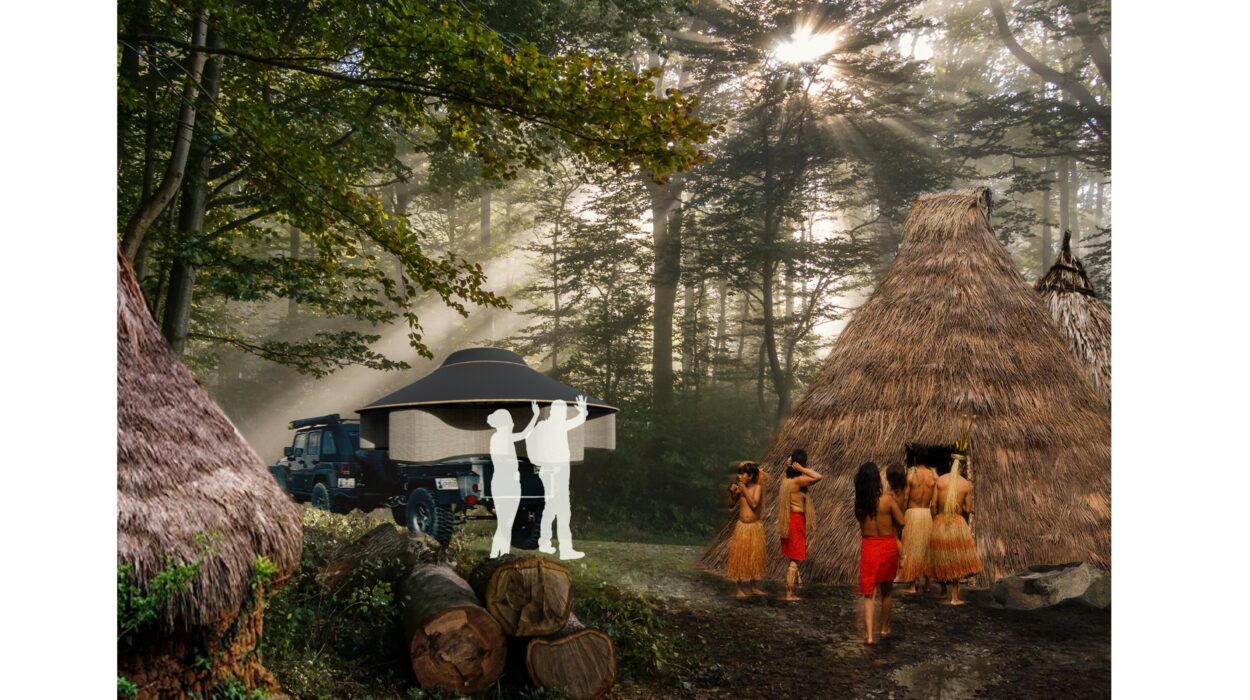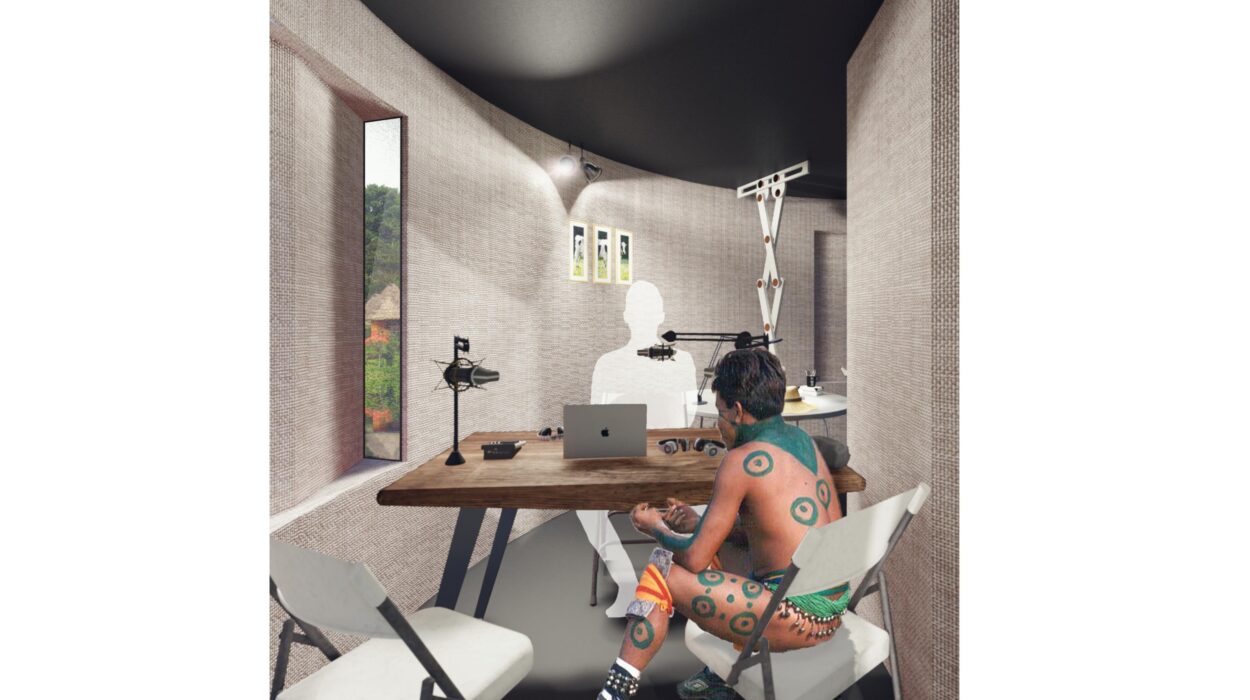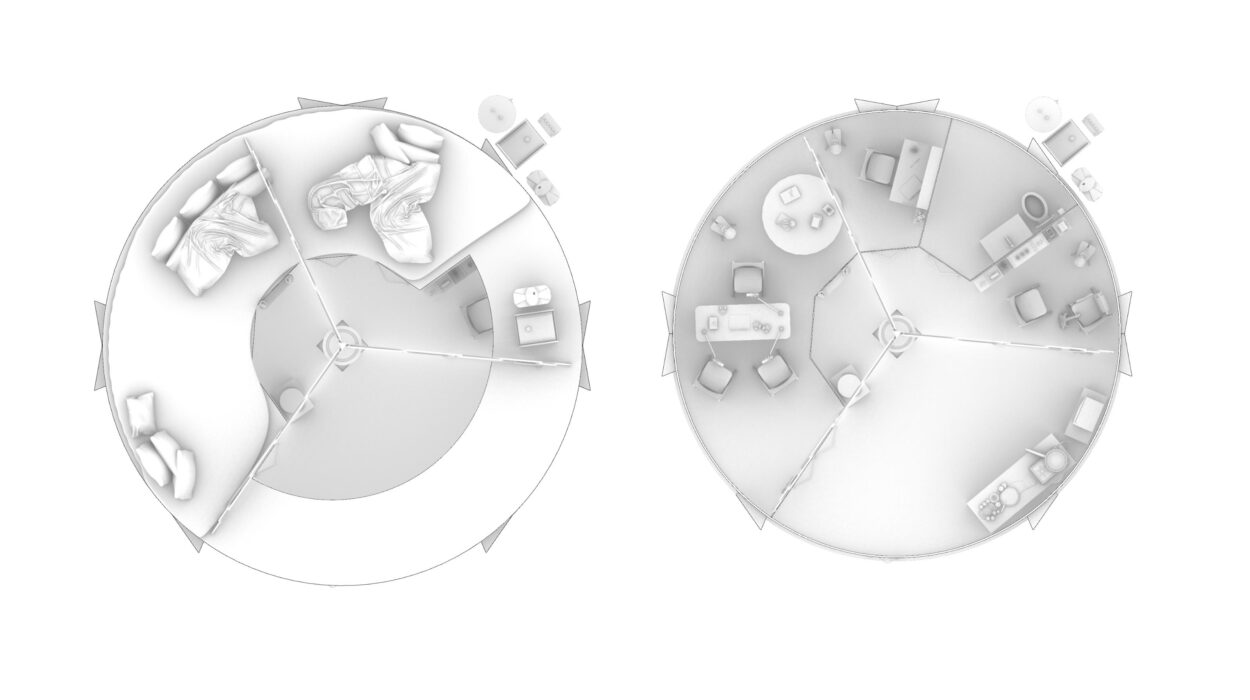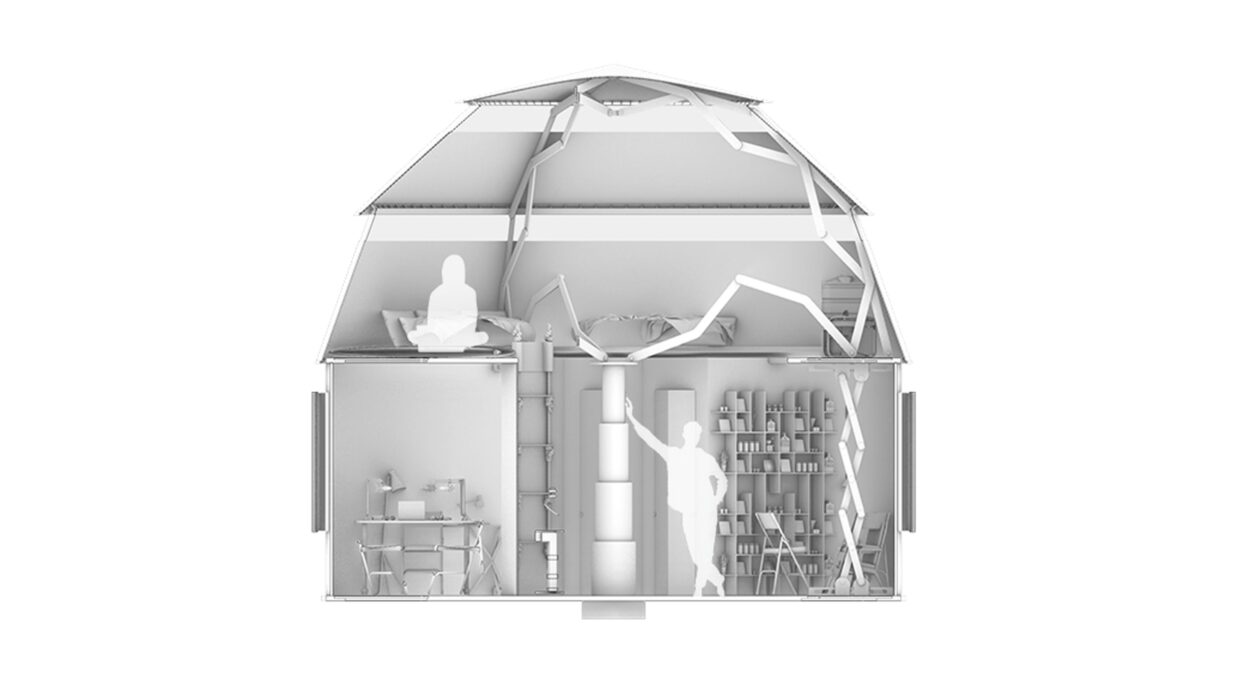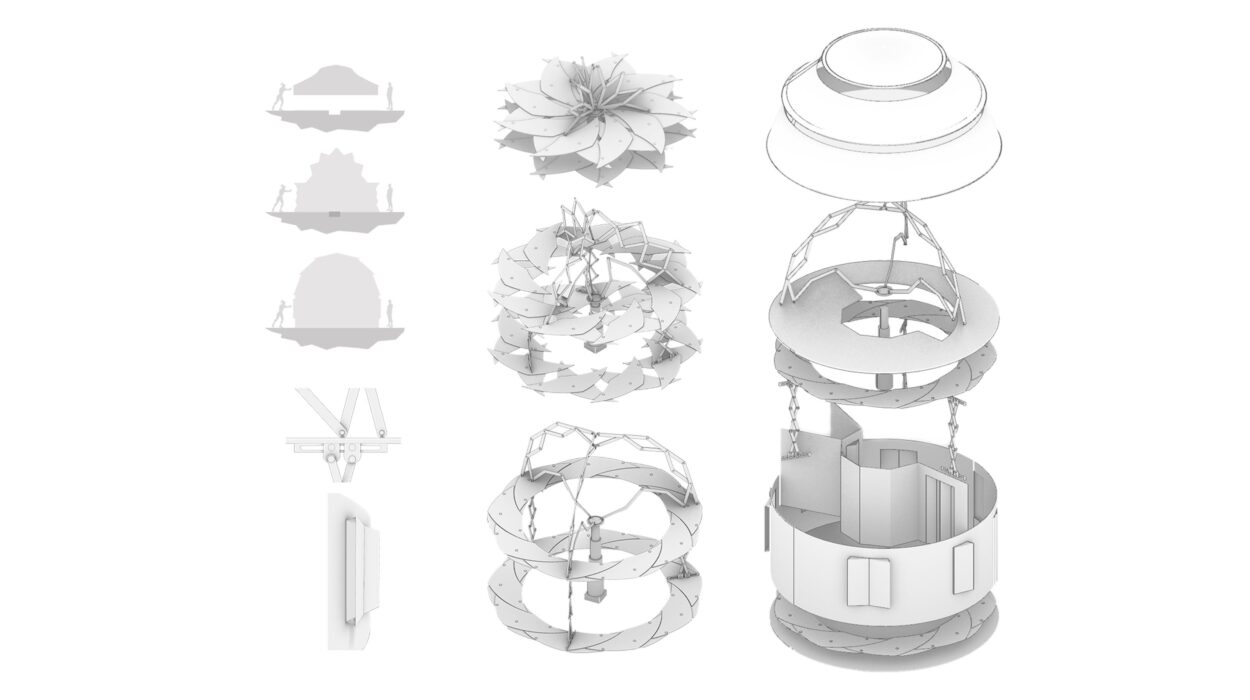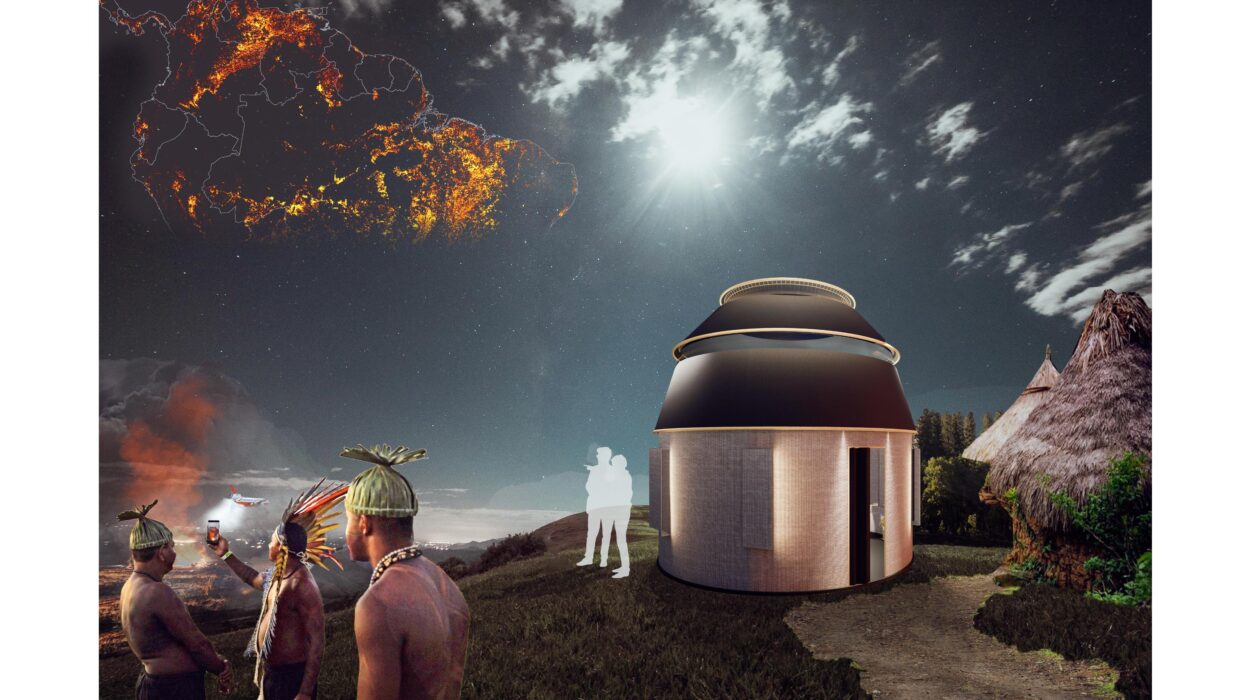

Located in Manaus, Brazil, this competition project embodies resilience and adaptability by drawing inspiration from the blossoming of Amazonian flowers. Designed for a young professional couple — podcasters and social activists — the semi‑permanent home enables them to travel across Brazil to interview local tribes and communities affected by unfolding fires. The architecture resonates with traditional tribal huts while integrating modern deployable structure principles. Engineered to contract and expand along both horizontal and vertical axes, the home minimizes its footprint for transport while maximizing interior comfort. Sustainable materials such as reclaimed aluminum frames and lightweight PTFE fabric ensure portability, durability, and eco‑consciousness. Circular circulation, diffused dome lighting, and stack‑effect ventilation create a thermally comfortable, off‑grid dwelling that merges cultural heritage with technical innovation.
Let’s talk
Have a question in mind? Do not hesitate to contact us
info@tritect.com

Find Us
INDIAD8/504, Sushant Ansal Aquapolis Ghaziabad, Uttar Pradesh india
UAEBusiness Centre, Sharjah Publishing City Free Zone, Sharjah, United Arab Emirates (UAE)